













Marvin Jung, a 51-year-old retail investor, requested 1,000 shares of SpaceX through Robinhood ahead of the largest initial public offering on record and received only 17 shares, according to CNBC.
Jung sold the position at $160, telling CNBC he plans to revisit the stock once the lockup period ends.
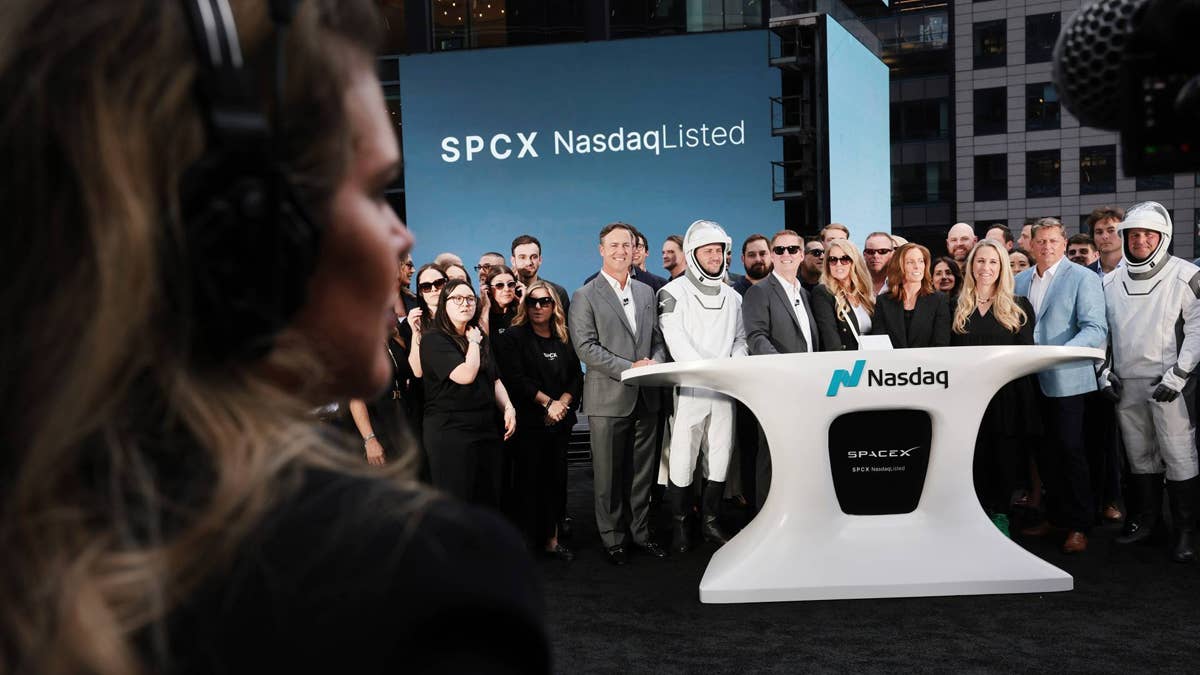
SpaceX priced its Nasdaq debut at $135 per share, watched the stock surge 19% on its first day of trading, and closed near $161 on June 12.
That opening-day jump lifted the company’s market capitalization above $2 trillion and cemented the offering as the biggest IPO ever recorded, CNBC reported.
For Jung and thousands of other retail buyers sitting on a same-day paper gain, the next move looks straightforward: sell into the rally and lock in the profit. The brokerages that distributed the shares have made that decision far more complicated.
Selling within a broker’s flipping window can trigger restrictions on future IPO participation, while holding past the first lockup release exposes investors to potential insider selling pressure.
Most retail buyers received a fraction of the SpaceX shares they ordered
SpaceX initially targeted up to 30% of its offering for individual investors, far above the standard 5% to 10% range, according to Fidelity.
Post-IPO reporting indicates the final retail allocation came in closer to 20% globally, after institutional demand forced a rebalance.
Ross Cameron, 41-year-old founder of trading education platform Warrior Trading, initially requested 2,500 shares through Schwab before raising his order to 4,250.
He ultimately received 147 shares at the $135 offering price, a small fraction of what he sought, Cameron told CNBC in a post-debut interview.
“I would’ve liked to have gotten more shares filled because it would’ve increased my total profit, but I understand the demand was very high,” Cameron said.
Justin Sacco, founder of Sacco Financial, requested 75 shares through Charles Schwab and received 11 at the $135 offering price.
Rather than lock in his opening-day gain and walk away, Sacco purchased four additional shares in the open market once trading began, bringing his total to 15.
“At the same time, considering the unprecedented demand for the IPO, I wasn’t shocked by the outcome. The fact that I received a meaningful allocation at all felt like a win,” Sacco told CNBC.
Broker flipping rules turn selling SpaceX stock into a penalty decision
Selling might seem logical for anyone sitting on a 19% gain in shares they barely received, but most of the five distributing brokerages attached significant strings.
Fidelity enforces a 15-calendar-day holding period, which is shorter than the 30-day flipping benchmark used by the Financial Industry Regulatory Authority, but it is backed by steep penalties.
A first sale inside that window triggers a six-month ban from future IPO allocations at Fidelity, and a second violation results in a one-year suspension.
A third offense results in a permanent ban tied to the investor’s Social Security number, with no path to reinstatement, according to Fidelity’s IPO explanation.
More SpaceX:
- Elon Musk sets SpaceX IPO price in blunt message to Wall Street
- Veteran hedge fund manager makes a brazen SpaceX bet
- Franklin Templeton CEO sends strong message on SpaceX
Robinhood applies a 30-day flipping window and imposes a 60-day lockout from its IPO Access program for first-time offenders, with no published escalation beyond that, Yahoo Finance reported.
SoFi matches that 30-day clock but escalates faster, with bans climbing from 180 days on a first offense to a full year, then to a permanent ban.
E*Trade sets a 30-day preference period and reserves discretionary authority to exclude early sellers from future offerings without publishing fixed penalty terms.
Charles Schwab is the lone outlier, enforcing no anti-flipping policy on the SpaceX offering or on IPOs generally unless the issuer specifically requires it.
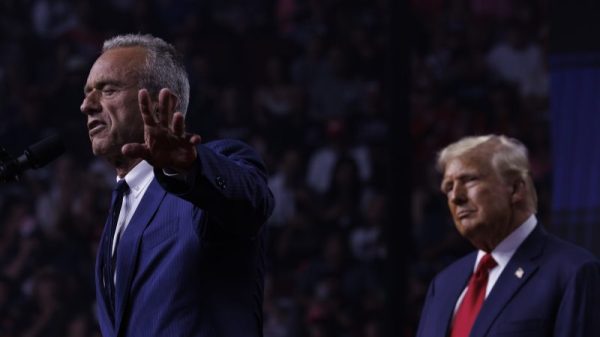
Spencer Platt/Getty Images
A staggered lockup could flood the market with insider shares by late summer
Retail investors who choose to hold face a second layer of risk: a staggered insider lockup that begins unlocking well before the standard 180-day mark.
SpaceX’s S-1 filing included a tiered release schedule rather than the single expiration date used by most initial public offerings, the U.S. Securities and Exchange Commission stated.
After SpaceX reports its first quarterly earnings, expected in August 2026, insiders will be eligible to sell up to 20% of their locked shares, the prospectus showed.
When a company is going public, insiders in particular typically have some information that outside investors might not be aware of
An additional 10% becomes eligible at the first window if the stock trades at least 30% above the $135 offering price. Rolling releases at 70, 90, 105, 120, and 135 days after the debut allow an additional 7% of locked insider shares to come free at each interval.
A second release of up to 28% follows the company’s third-quarter earnings, with all remaining insider shares freely tradable at the 180-day mark in December 2026.
Elon Musk and major investors are subject to a separate 366-day lockup that runs until approximately June 2027.
The real cost of selling SpaceX stock may be the IPO access it forfeits
For retail investors holding a handful of shares, the dollar value of their paper gain is only one part of the calculus highlighted in brokerage disclosures.
The Wall Street Journal reported that OpenAI is preparing for a public listing in the fourth quarter of 2026, with Anthropic also planning a late-2026 debut.
Investors who trigger flipping restrictions at their brokerage now risk being locked out when those offerings reach the market.
A buyer who sold 17 shares at $161 would realize roughly $442 in gross profit, a gain that could seem small compared to a missed allocation in a future offering.
For investors holding small allocations, the trade-off is between a modest realized gain now and continued IPO access at their brokerage as additional mega-listings approach the market.
Related: SpaceX IPO reminds investors where real fortunes start