
















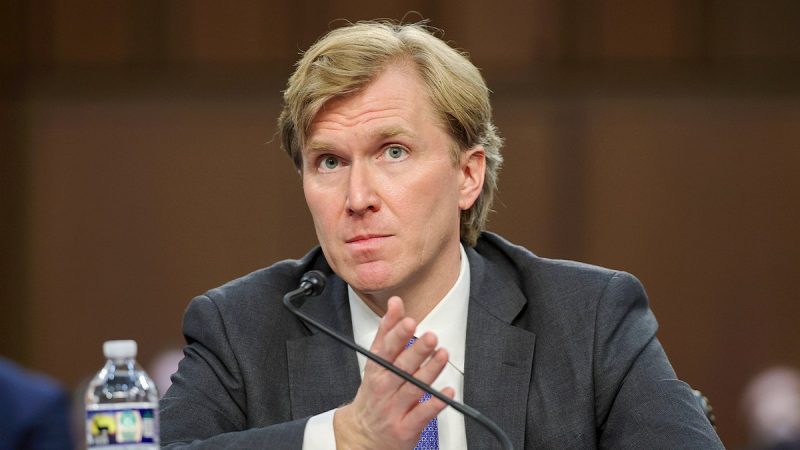
Undersecretary of War for Policy Elbridge Colby told lawmakers that the administration’s latest defense strategy proposal does not sideline the U.S.’ European allies, but rather it aims to go back to a ‘Cold War mentality’ with an emphasis on ‘burden sharing.’
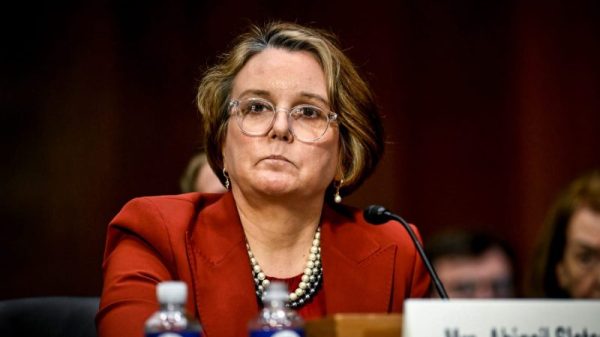
The Pentagon policy chief was grilled on Tuesday as members of the Senate Armed Services Committee questioned the 2026 National Defense Strategy (NDS).
The strategy outlines a shift in U.S. priorities to keep Washington engaged in Europe while also prioritizing defense of the ‘U.S. Homeland and deterring China.’ The NDS also calls for NATO allies, which it says are ‘substantially more powerful than Russia,’ to take responsibility for Europe’s conventional defense.
Senate Armed Services Committee Chairman Roger Wicker, R-Miss., expressed doubts in his opening statement about leaving Europe to handle threats from Russia. The senator said that ‘any clear-eyed assessment of the military situation in Europe makes it clear we cannot fully delegate the Russia problem to our European allies.’
Sen. Jack Reed, D-R.I., the committee’s ranking member, called the NDS a ‘flawed proposal,’ and also expressed concerns about the strategy’s approach to Russia, which he said focused U.S. efforts on Moscow’s growing nuclear arsenal, as well as its advances in space and cyber spaces.
‘While I understand the logic of pursuing the right balance of U.S. military capabilities with those of our European allies, I do not accept the abdication of our clear national security interests in Europe by suggesting Russia is their problem to manage,’ Reed said in his opening remarks.
Colby told the senators that the strategy did not leave America’s allies in danger, saying it was meant to focus U.S. resources ‘realistically and prudently’ while accounting for ‘our allies’ and partners’ ability and will to meet those challenges.’ He described the strategy as going back to a ‘Cold War mentality’ that focused on U.S. allies doing their part to combat threats within their regions. The Pentagon policy chief noted that the U.S. has a network of allies with ‘tremendous military power.’
Colby said the model that the administration is pursuing is ‘NATO 3.0,’ which aims to have ‘wealthy European allies take the lead for the conventional defense of European NATO.’
‘In Europe and other theaters, allies will take the lead against threats that are less severe for us but more so for them, with critical but more limited support from the United States,’ he said.
Colby cited this when responding to concerns Wicker expressed during his statement, saying that the strategy recognizes European interests in the context of certain threats without leaving U.S. allies in the lurch. He said the strategy is a return to shared defense burdens and responsibilities.
‘I think this is a return to the Cold War mentality, when these were expected to be real military alliances with burden-sharing, and members of this committee in the 1970s and ’80s on both sides of the dais, would make a real point of making sure that our allies did their part. And we’re going back to that noble heritage,’ he said.
Related Article