




Let’s hope the Federal Reserve learned a mighty big lesson from the pandemic-era economic debacle that emerged when the U.S. central bank delayed raising interest rates to tame soaring inflation.
Otherwise, history is doomed to be repeated.
And that means the relatively resilient U.S. economy could be at risk of creating another fine mess if policymakers don’t monitor underlying risks from sticky inflation, energy costs, artificial intelligence buildout and tariffs.
Starting now, Federal Reserve Governor Christopher Waller said policymakers need to be mindful of the 2021-2022 inflation episode.
“No matter how you cut it, or what measure you want to use, inflation is up this year,” Waller said in a July 13 speech. “At this point, I am concerned about the elevated pace of core inflation.”
The U.S. central bank may need to raise interest rates in the near term if upcoming data — including the July 14 Consumer Price Index — continues to run hot, he said.
“I would be very pleased to see a lower reading on core inflation, but after its escalation over the first half of this year, I will need to see several months of lower readings to feel that inflation is moving in the right direction,” Waller said, adding that he would support holding the benchmark Federal Funds Rate steady if that happens.
The Fed, he said, is at a “crossroads.”
Monetary policy is a tricky balance of prices, jobs
Waller’s speech before the New York Association for Business Economics came one day before Fed Chairman Kevin Warsh was scheduled to give the twice-yearly Monetary Policy Report to Congress.
The report, issued July 10, said the outlook of the future path of interest rates “is subject to considerable uncertainty.”
The Fed, according to its dual Congressional mandate, has one job to do: use monetary policy to keep prices stable and the labor market at full employment.
That’s tricky.
- Lower interest rates support hiring but can fuel inflation. This risks fueling further inflation, potentially leading to an inflationary spiral.
- Higher rates cool prices but can weaken the job market. This increases the cost of borrowing and further stifles economic activity.
Fed holds interest rates steady thus far this year
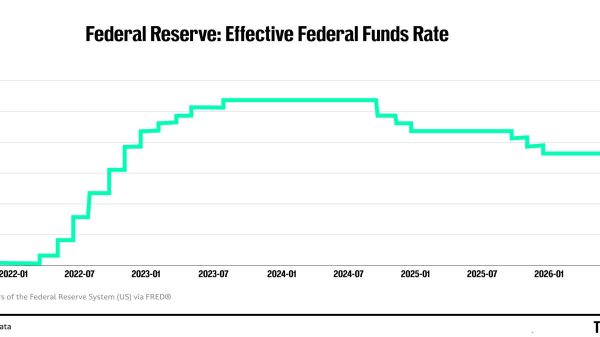
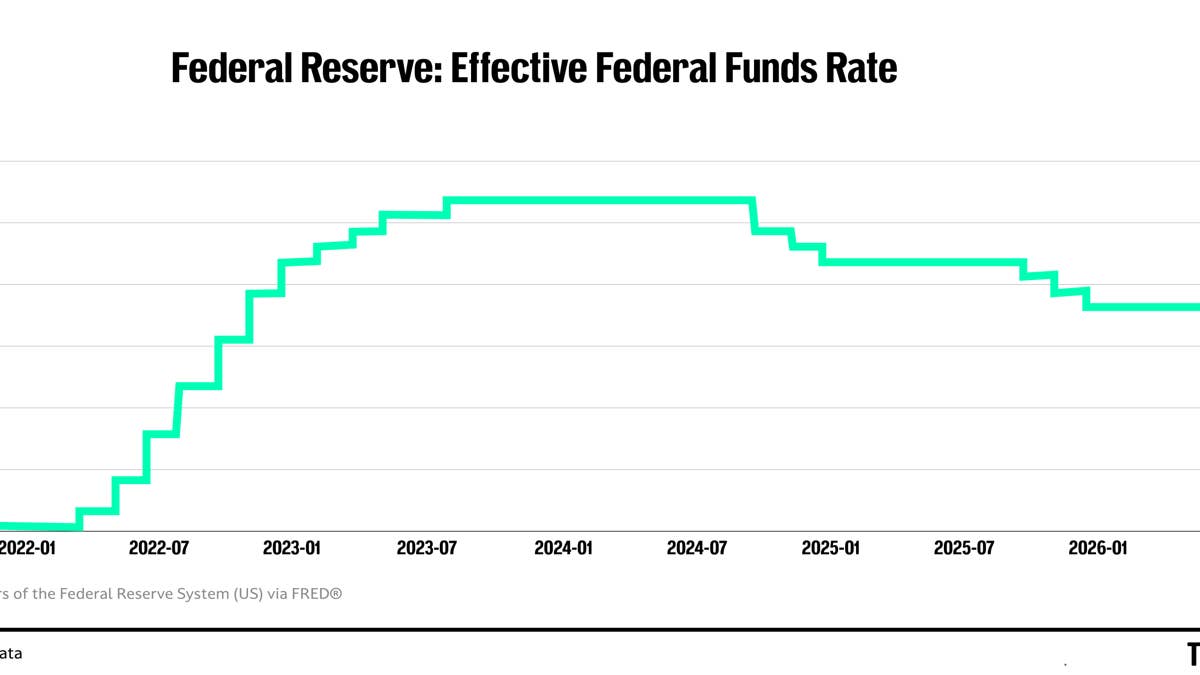
The rate-setting Federal Open Market Committee voted unanimously last month to hold its benchmark Federal Funds Rate target in a range of 3.5% to 3.75%.
But the minutes of the June FOMC meeting showed policymakers split on inflation risk and the impact on interest rates.
The CME Group FedWatch Tool is pricing in at least one 25 basis-point hike by year-end in part due to underlying inflation risks.
Fed cut interest rates in 2025
The funds rate is the interest rate at which banks lend balances at the Federal Reserve to other banks overnight.
A change in the funds rate triggers moves in borrowing costs ranging from credit cards to auto loans to even mortgage terms.
Policymakers had cut rates by 25 basis points at its last three meetings of 2025 to shore up the softening labor market.
These “insurance” cuts stopped after the majority of policymakers decided the risk from higher prices was outweighing signs that the labor market was stabilizing.
Waller was especially vocal beginning in the summer of 2025 about the rising risk in the labor market, which he said appears to have abated.
How the 2021-2022 inflation surge impacted rates
Under then-Chair Jerome Powell, the Fed’s initial delay in raising interest rates during the 2021-2022 inflation surge forced policymakers into 11 aggressive, subsequent hikes to curb soaring pandemic-era prices.
The result: a strain on the financial system that heightened recession risks and made the U.S. economy vulnerable to a severe economic crisis.
Related: Fed’s Warsh faces tough interest-rate smackdown in Congress
It was the fastest policy-tightening cycle in 40 years.
Inflation peaked in June 2022 with headline PCE — the Fed’s preferred inflation gauge — topping out at 7.1% and CPI spiking to a peak of 9.1%.
In total, the Fed raised the benchmark Federal Funds Rate by 525 basis points, lifting the target range from 0%-0.25% to a 22-year-high of 5.25%-5.50% to cool consumer demand and restore price stability.
Waller issues warning, cites past Fed rate-hike delays
Waller said the U.S. economy is currently in good shape with the labor market appearing stable and consumer demand resilient.
“If we get another hot reading on core inflation this week, then the FOMC will need to consider tightening monetary policy in the near term,” Waller said.
Consensus puts June headline CPI near 3.8% from a year ago, down from 4.2% in May. Nearly all of the improvement comes from a roughly 10% drop in retail gasoline prices as Persian Gulf supply fears eased in June.
Core PCE began rising in January to peak at 3.4% in May. The Fed has missed its 2% inflation target for the last five years.
Persistent increases in underlying inflation could signal that price pressures are spreading through the economy, Waller said.
“The FOMC has to be ready to tighten monetary policy to prevent a repeat of the 2021-to-2022 inflation episode,” he said.
Bloomberg Economics Chief U.S. Economist Andrew Sacher said it was unrealistic to think the FOMC will move interest rates at its July 28-29 meeting.
Related: Warsh recruits all-star team, AI experts to kickstart Fed reform