













The Iran War, tariffs and the demand-driven AI-investment boon could add up to create inflationary conditions where Federal Reserve policymakers would need to consider interest-rate hikes later this year.
But not just yet.
According to the minutes of the June Federal Open Market Committee meeting, policymakers at the central bank were concerned about high inflation but needed more data before making a move on the benchmark Federal Funds Rate.
The data could also signal that rates should continue to hold for a while or even go lower sooner than many expected.
The minutes do not name participants so Fed watchers need to closely read the words in the 15-page document released July 8 as well as read between its lines.
LPL Financial Chief Economist Jeffrey Roach said the minutes suggest the FOMC had a “good family fight” over the various scenarios under review — a difficult situation with a wide range of outcomes.
“One thing is certain: future policy is heavily contingent on the political situation in the Middle East. If we can tease out any forward guidance from the minutes, it would be the committee is working through a wide range of scenarios and will not commit to a specific scenario until the incoming data provides necessary clarity,’’ he said.
Roach added that he didn’t expect the FOMC to make a change in either direction at the July 28-29 meeting.
Fed’s dual mandate requires a tricky dance
The Fed’s dual mandate from Congress requires maximum employment and stable prices.
- Lower interest rates support hiring but can fuel inflation. This risks fueling further inflation, potentially leading to an inflationary spiral.
- Higher rates cool prices but can weaken the job market. This increases the cost of borrowing and further stifles economic activity.
Fed holds interest rates steady thus far this year
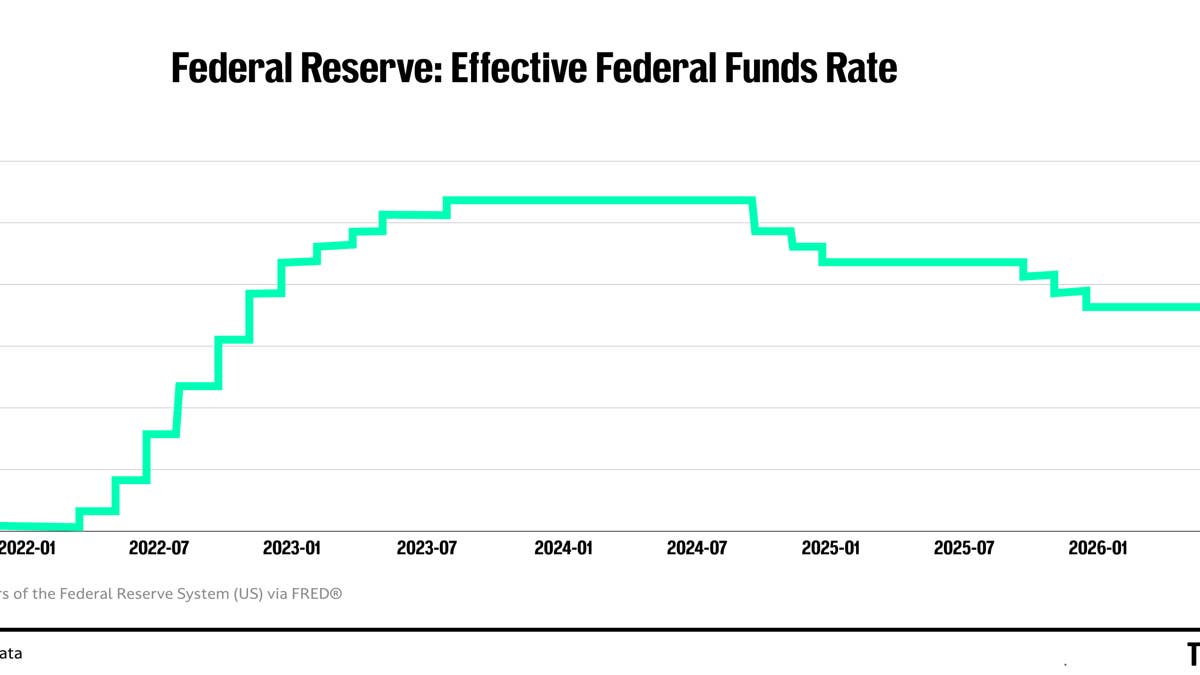
The rate-setting Federal Open Market Committee voted unanimously last month to hold its benchmark Federal Funds Rate target in a range of 3.5% to 3.75%.
Policymakers had cut rates by 25 basis points at its last three meetings of 2025 to shore up the softening labor market.
These “insurance” cuts stopped after the majority of policymakers decided the risk from higher prices was outweighing signs that the jobs market was stabilizing.
The funds rate is the interest rate that the Federal Reserve charges other banks overnight.
A change in the funds rate triggers moves in borrowing costs ranging from credit cards to auto loans and influences long-term mortgage rates.
It is one of several tools the Fed could use to maintain a balanced economy that is neither overheating nor cooling down.
Warsh says inflation risk is dropping
Federal Reserve Chair Kevin Warsh said July 1 that inflation risks have come down in recent weeks although he didn’t offer data or other numbers to support his argument.
Instead, speaking at the European Central Bank’s annual gathering of international policymakers and economists in Sintra, Portugal, the new Fed chair doubled down on his hawkish pledge from the June FOMC meeting that the Fed will focus on delivering “price stability.”
Warsh emphasized the Fed’s commitment to getting inflation back down to its 2% target — a level it has missed for the last five years.
Related: BofA flips the script with bombshell Fed interest-rate outlook
“If there were people in households or the business sector or the financial markets who thought that this central bank was going to be comfortable with an inflation objective above 2%, well, I guess they’d be disappointed,” he said.
“We’re going to deliver price stability in the U.S.,” Warsh said, adding that “the tactics, the strategy and the rest, that’s still to come.”
June FOMC minutes show Fed split on interest-rate outlook
The FOMC debated multiple scenarios June 16-17 on how the U.S. economy could evolve through the end of the year.
In a scenario featuring moderating inflation, “most” participants said they expected the central bank would “maintain or eventually lower the target range for the Federal Funds Rate.”
But “most” participants said that “some policy firming would likely be warranted” if inflation remains elevated.
What’s ahead for interest rates?
Following the July 7 release of the June FOMC meetings, the CME Group FedWatch Tool estimated there will be at least one 25 basis point rate hike this year with more potentially to come in 2027.
New York Fed President John Williams said July 7 that monetary policy was well positioned and that he expected Headline PCE, the Fed’s preferred inflation gauge that’s been hitting close to 4%, will dip over the next several months as energy prices stabilize.
Vinny Amaru, Global Investment Strategist at J.P. Morgan Wealth Management, told TheStreet in an email following the June jobs report on July 2 that the U.S. economy remains resilient overall.
“Slightly weaker payroll gains and mild wage growth reinforce our view that the Fed will remain on hold this year as neither signal the need to hike interest rates to cool an overheating labor market,’’ Amaru said.
Related: Warsh drops inflation bombshell that could reset interest-rate bets