


















The reflex reaction to a stock that has climbed from $37 in early 2025 to more than $2,000 is that the move is over — that anyone buying SanDisk (SNDK) now is chasing a bubble. That reflex misses what actually changed. SanDisk Corporation (SNDK) trades at $2,023.54 with a market capitalisation of roughly $301 billion as of July 2, 2026 (StockAnalysis), and the single most important variable for any 2026, 2027 or 2030 price prediction is no longer the spot NAND price — it is the wall of multi-year supply contracts that has put a hard floor under the company’s earnings. That structural shift, not momentum, is what this SanDisk price prediction is built on.
Here is the insight most coverage buries: SanDisk has signed five multi-year long-term agreements (LTAs) this year, with three inked in its fiscal third quarter alone carrying a minimum total value of $42 billion and terms extending through 2030 (TheStreet). Bernstein estimates that even in a NAND price collapse more severe than 2010’s, SanDisk’s fiscal 2027 earnings per share (EPS) could still reach $214 with roughly 60% of output covered by these contracts — versus just $81 without them. A memory stock with a contractual earnings floor is a different animal from the boom-bust cyclical the market is used to pricing, and that reframing drives every scenario below.
Key Facts:
• SNDK price: $2,023.54; market cap ~$301 billion — StockAnalysis, July 2, 2026
• The stock rose from $37 in early 2025 to over $2,000 by June 2026 on an AI-driven memory shortage — The Motley Fool
• 22 analysts rate SNDK a “Buy” with an average 12-month target of ~$1,751 — high $3,250, low $1,000 — MarketBeat
• Bernstein (Mark Newman) target: $3,000 (Outperform); Bank of America: $2,500 (Buy) — Investing.com
• $42 billion in minimum contract value from Q3 LTAs, some running through 2030 — TheStreet
• Trailing P/E around 58 after a near-700% year-to-date surge — StockAnalysis
• Next earnings: August 13, 2026
What’s actually happening — and why SanDisk exploded
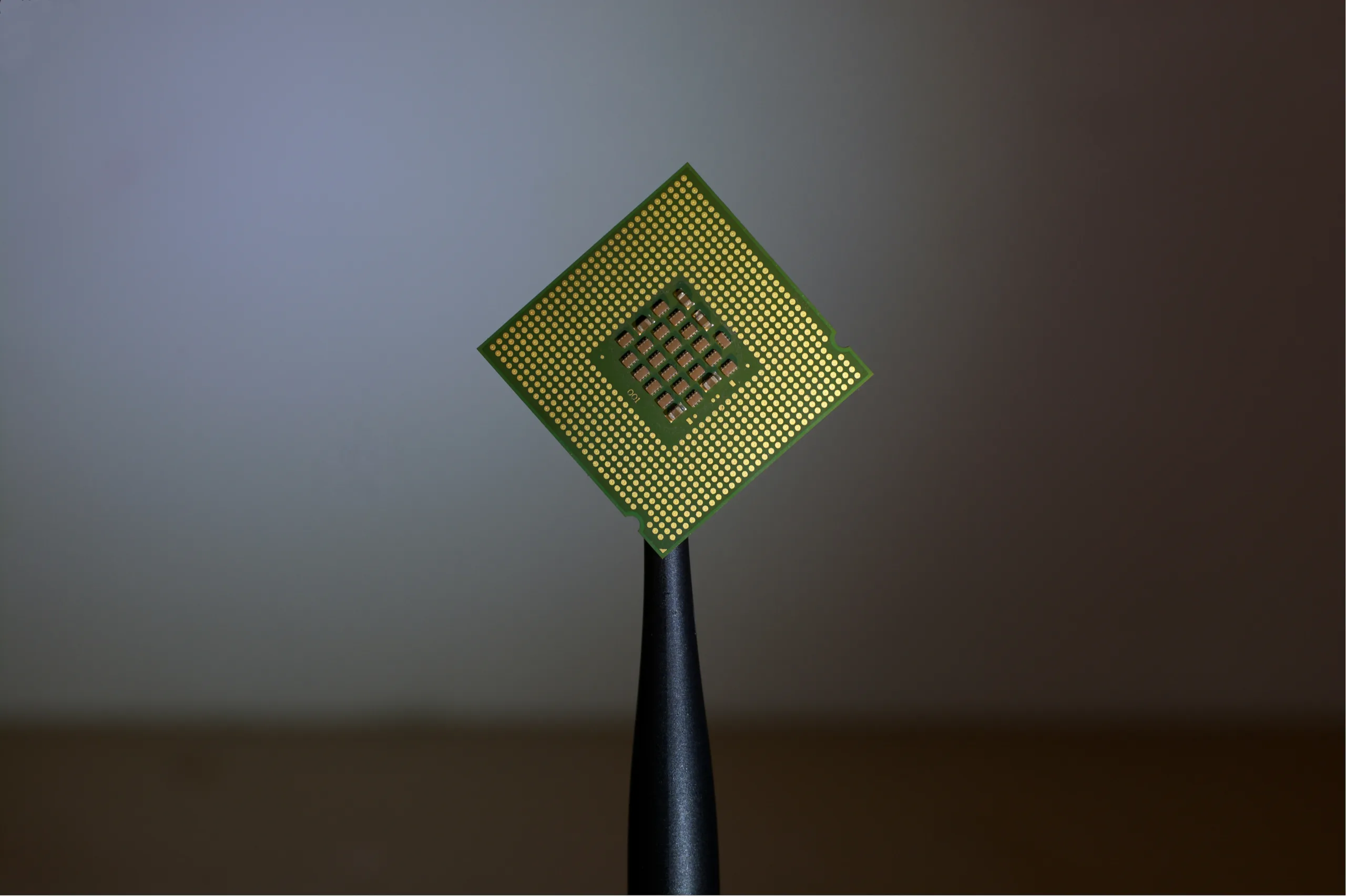
SanDisk is the NAND flash memory business that Western Digital spun off as a standalone, Nasdaq-listed company in early 2025. NAND is the storage that holds data at rest — in phones, laptops, and, increasingly, the enterprise solid-state drives (SSDs) that feed artificial-intelligence data centres. For a decade, NAND was a brutal commodity: oversupply crushed prices, suppliers lost money through the trough, and the stocks traded like the cyclicals they were.
The AI build-out broke that pattern. Training and inference generate enormous volumes of data that must be stored fast and close to the compute, and that demand collided with years of supply discipline to produce a genuine shortage. SanDisk and rival Micron became two of the few clean AI-memory winners, and SanDisk’s move was the more spectacular of the two precisely because it started from a post-spin-off base near $37. The company is now large enough that its swings move the S&P 500.
SanDisk and Micron are not identical bets, and the distinction matters for the price prediction. Micron spans DRAM and high-bandwidth memory (HBM) as well as NAND, giving it direct exposure to the AI-accelerator memory stack; SanDisk is the purer NAND-flash play, which makes it higher-beta to the storage side of the cycle — it falls harder when spot prices roll and rises faster when they spike. Analysts have flagged that the valuation gap between the two has at times looked stretched in both directions, which is part of why SanDisk’s target range is so wide. For investors, SNDK is the more concentrated way to express the AI-storage thesis, with the volatility that concentration implies.
The reason the run has legs beyond simple scarcity is the shape of the new contracts. As Micron’s chief executive framed the same industry dynamic, the durability is now written into the deals themselves.
“Micron is investing at record levels in technology, products and supply to address our customers’ rapidly growing demand. We believe our multiyear Strategic Customer Agreements will significantly enhance the durability and predictability of Micron’s strong financial performance.”
— Sanjay Mehrotra, Chief Executive Officer, Micron Technology (Micron)
SanDisk (SNDK) price prediction: 2026, 2027 and 2030
The 2026 numbers below are live Wall Street targets. The 2027 and 2030 figures are FinanceFeeds scenario estimates, built by applying through-cycle price-to-earnings (P/E) multiples to Bernstein’s published EPS estimates — they are analysis, not analyst price targets, which only extend about 12 months. Every scenario is a range, and memory is volatile enough that all of them carry wide error bars.
| Horizon | Bear case | Base case | Bull case | Primary driver |
|---|---|---|---|---|
| 2026 (12-month) | $1,000 | $1,850 | $3,250 | Street low / ~$1,751 consensus average / street high (MarketBeat) |
| 2027 | $1,200 | $2,400 | $3,800 | Bernstein FY2027 EPS ~$214 (LTA-protected) to FY2028 EPS ~$273, at 6–14× through-cycle |
| 2030 | $1,200 | $3,000 | $4,800 | LTAs run through 2030; supercycle persistence vs post-cycle reversion |
Sources: MarketBeat and Investing.com for 2026 analyst targets; FinanceFeeds scenario model applying 6–14× multiples to Bernstein’s fiscal 2027–2028 EPS estimates for 2027–2030. Not a forecast of actual results.
What is the SanDisk stock forecast for 2026? Wall Street is bimodal. The average 12-month target of roughly $1,751 sits below the current $2,023 price, implying the median analyst sees modest downside after the run (MarketBeat). Yet the two loudest recent calls point sharply higher: Bank of America lifted its target to $2,500, and Bernstein’s Mark Newman took his to $3,000 — nearly 50% above spot. The street’s own low-to-high band of $1,000 to $3,250 captures the disagreement perfectly: this is a stock where the bull and bear cases are both fully articulated and roughly a triple apart. For 2026, treat $1,850 as the gravity-pull consensus, $3,250 as the momentum-plus-LTA bull ceiling, and $1,000 as the “memory cracks and multiples compress” floor.
“[The older contracts had been] extremely lopsided in favor of the customer.”
— Mark Newman, Senior Analyst, Bernstein, on why the new memory LTAs change the earnings profile (TheStreet)
The bull case: a contractual floor under a cyclical stock
The bullish argument is not “AI goes up forever.” It is that SanDisk has converted a chunk of its revenue from spot-priced commodity into contracted, fixed-or-range-bound cash flow. Newman’s $3,000 target rests on 11 times Bernstein’s fiscal 2028 EPS estimate — or 14 times the firm’s fiscal 2026–2030 average “through-cycle” EPS — which implies the market can value SanDisk on normalised earnings power rather than a single boom year (The Bull). Bernstein pegs the contractual floor price at roughly $0.29 per gigabyte, broadly in line with its second-quarter 2026 average selling price estimate. The multiple math is worth spelling out: an $3,000 target at 11 times fiscal 2028 EPS implies the firm expects SanDisk to earn on the order of $273 per share in fiscal 2028 — a figure that, if achieved, would make today’s $2,023 price look like roughly 7 times those forward earnings rather than the 58 times trailing multiple the screen shows. The entire bull thesis hinges on whether that forward EPS is real or a cycle-peak mirage.
Put the contracts next to the market cap and the reframing becomes concrete. The $42 billion of minimum contract value disclosed from a single quarter’s LTAs equals roughly 14% of SanDisk’s ~$301 billion market capitalisation, locked in through 2030 — and that is only the three deals signed in fiscal Q3, not the full book of five agreements. With about 60% of output contracted, the swing factor for earnings narrows to the remaining 40% exposed to spot NAND. That is the data synthesis the headline P/E of 58 hides: the market is applying a peak-cycle multiple to a company that has quietly de-risked most of its revenue line. Bernstein’s willingness to value the stock on a fiscal 2026–2030 average EPS rather than a single year is the analytical expression of exactly this shift.
The peer read-through supports it. Micron confirmed the memory supercycle with a record quarter, and the two stocks trade as a pair on the same thesis — our Micron stock price prediction of $385 to $2,000 maps the identical dynamic on the DRAM side. If the AI-storage build-out sustains into 2027 and 2028 and the LTAs deliver the visibility management claims, the bull path to $3,800 by 2027 and toward $4,800 by 2030 is a story of rising contracted EPS meeting a re-rating from “cyclical” to “structural growth” — the same journey the market has already granted parts of the AI-chip complex covered in our Broadcom (AVGO) forecast and TSMC outlook.
The bear case and the risks that cap the upside
The bear case starts with a simple fact: at $2,023, SanDisk trades above the average analyst target, on a trailing P/E of roughly 58, after a near-700% year-to-date surge. That is priced for continued acceleration, and memory has never been a business that accelerates indefinitely. On July 1, 2026, SNDK fell 9.91% in a single session as memory names pulled back — a reminder of how quickly sentiment unwinds in this group (TradingKey).
Three risks define the downside. First, cyclicality: NAND supply is expanding, and if the AI-storage shortage eases faster than expected, spot prices fall and the uncontracted 40% of output re-rates hard — the path to the $1,000–$1,200 bear zone. Second, valuation: a P/E near 58 leaves no margin for a demand wobble, and multiple compression alone could halve the stock even with flat earnings. Third, concentration and execution: the LTAs concentrate revenue in a handful of hyperscale customers, and any renegotiation, cancellation clause, or capex pause among them would test the “floor.” Even Bernstein’s protected FY2027 EPS of $214 assumes the contracts hold as written in a downturn — a reasonable base case, but not a guarantee. The honest read is that SanDisk is simultaneously cheaper on through-cycle earnings than its P/E suggests and more fragile to sentiment than its contracts imply.
What happens next — catalysts and predictions
The near-term calendar is dominated by the August 13, 2026 earnings report, where the market will scrutinise three things: the size and pricing of any new LTAs, management’s read on NAND supply-demand into 2027, and gross-margin trajectory. Expect the stock to stay violent around it — options-implied moves for memory names have been running large all year.
Three predictions with their reasoning. First, through year-end 2026, SNDK most likely oscillates in a wide $1,600–$2,700 band rather than trending cleanly, because the consensus average ($1,751) and the top bull targets ($3,000–$3,250) are pulling in opposite directions and neither camp has been proven right yet. Second, 2027 is the year the LTA thesis is tested in the numbers: if contracted EPS lands near Bernstein’s $214 and the cycle holds, a re-rating toward the $2,400 base and $3,800 bull is credible; if spot NAND rolls over, the uncontracted book drags the stock toward $1,200. Third, by 2030 the range only widens — the LTAs that run through the decade provide a floor, but whether SanDisk is a $1,200 post-cycle cyclical or a $4,800 structural AI-storage compounder depends on something no model can yet resolve: whether AI data-storage demand proves to be a step-change or a spike. For the broader AI-hardware backdrop, our AMD stock forecast tracks the demand engine driving all of it.
FAQ
What is the SanDisk (SNDK) price prediction for 2026?
Analyst 12-month targets range from a low of $1,000 to a high of $3,250, with an average near $1,751 and a “Buy” consensus (MarketBeat). Bernstein sits at $3,000 and Bank of America at $2,500, while the average target implies modest downside from the current $2,023 price.
What could SNDK stock be worth in 2027?
On a FinanceFeeds scenario model applying through-cycle multiples to Bernstein’s EPS estimates, 2027 spans roughly $1,200 (bear), $2,400 (base) and $3,800 (bull). The base and bull cases assume the long-term supply agreements deliver contracted earnings near the $214 EPS Bernstein models.
What is the SanDisk 2030 forecast?
2030 is highly speculative. Our scenario range is $1,200 (bear) to $4,800 (bull), with a $3,000 base. SanDisk’s LTAs extend through 2030, providing an earnings floor, but the top of the range requires the AI-storage supercycle to persist rather than revert.
Why has SanDisk stock risen so much?
SNDK climbed from about $37 in early 2025 to over $2,000 by mid-2026 on an AI-driven NAND memory shortage, then re-rated further as it locked in $42 billion of multi-year supply agreements that reduce its historic boom-bust cyclicality.
Is SanDisk stock overvalued?
It trades on a trailing P/E near 58 and above the average analyst target, which several analysts flag as overbought. Bulls counter that on through-cycle EPS the valuation is far lower; the disagreement is why the target range is so wide.
SanDisk vs Micron: which is the better AI-memory stock?
Micron is the diversified play — DRAM, high-bandwidth memory and NAND — while SanDisk (SNDK) is the concentrated, higher-beta NAND-flash bet. SanDisk tends to move more violently in both directions. Both are backed by multi-year supply agreements; the choice comes down to whether an investor wants broad AI-memory exposure or a pure storage-cycle position.
This article is informational analysis only and is not financial, investment, or trading advice. Stock prices — memory and semiconductor names especially — are highly volatile and can fall sharply. Multi-year price scenarios are illustrative models based on third-party estimates and stated assumptions, not forecasts of actual results; past performance does not guarantee future returns. Do your own research and consult a regulated financial adviser before making any investment decision.