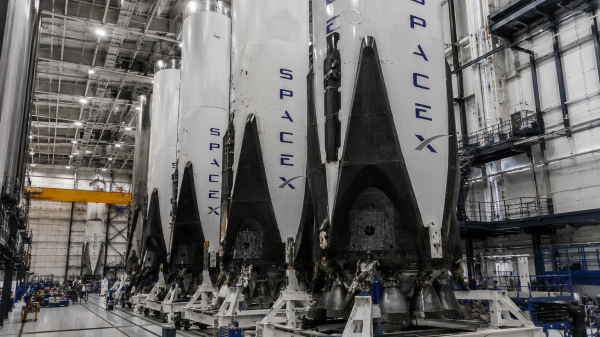



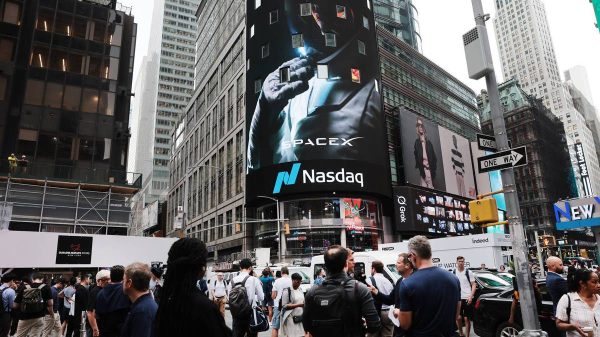







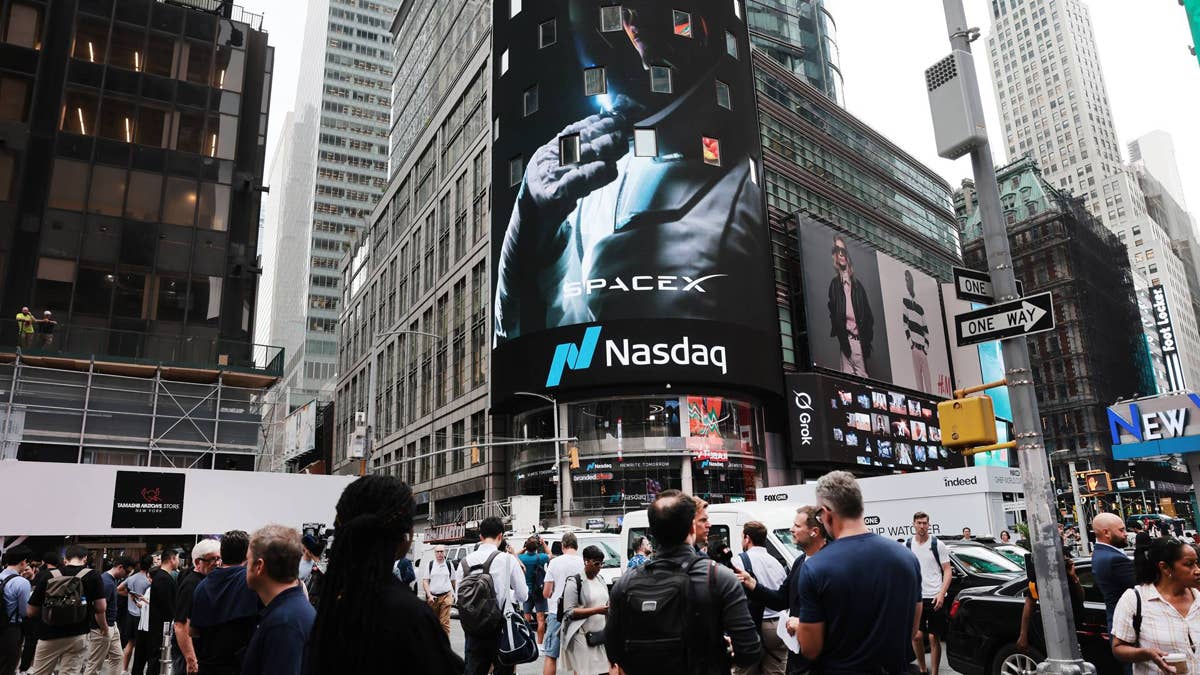
SpaceX went public on Nasdaq on June 12 with a $75 billion raise and a valuation that eclipsed every initial public offering in history.
The stock surged 19% on its first day of trading, closing at $160.95 and briefly trading near a $2.25 trillion intraday valuation before paring gains to finish with a market capitalization of about $2.1 trillion, CNBC reported.
If you were among the investors weighing a purchase during the post-listing frenzy, one prominent voice had a pointed warning.
NYU Stern professor Scott Galloway argued in an analysis published by Prof. G Media that SpaceX’s $1.75 trillion target valuation had “no anchor.”
His central argument was direct: not one investment bank on the deal could identify a clean public comparable to justify the asking price.
SpaceX’s bankers could not find a valuation peer
At $1.75 trillion, SpaceX was set to trade at roughly 94 times trailing revenue on $18.7 billion in annual sales, Galloway noted.
That valuation is far higher than any company in the S&P 500. Even Palantir Technologies, the index’s most richly valued stock by price-to-sales ratio, trades at about 67 times its annual revenue.
Related: SpaceX gets brutal verdict from legendary Wall Street investor
The company’s underwriters tried Boeing, AT&T, Palantir, GE Vernova, and Vertiv as potential peers, but none fit cleanly, Galloway explained.
To bridge the gap, bankers told investors that SpaceX’s total addressable market is $28.5 trillion, roughly equal to the entire United States economy.
That estimate includes $22.7 trillion in projected enterprise application revenue, about 30 times larger than the current enterprise software market, Galloway noted.
The 30% retail allocation raised red flags before SpaceX listing
Typical initial public offerings reserve 5% to 10% of shares for individual buyers, with the bulk going to institutional investors.
SpaceX set aside as much as 30% of its available shares and distributed them through Robinhood, Charles Schwab, Fidelity, SoFi, and E*Trade, the analysis stated.
Galloway read the oversized retail allocation as a sign that institutional buyers were not willing to absorb the full deal at the requested price.
More SpaceX:
- Elon Musk sets SpaceX IPO price in blunt message to Wall Street
- Veteran hedge fund manager makes a brazen SpaceX bet
- Franklin Templeton CEO sends strong message on SpaceX
He argued SpaceX was counting on the same retail enthusiasm that has powered Tesla shares for years to sustain a valuation with few precedents.
He compared the dynamic to Saudi Aramco’s 2019 debut, which held the previous record for the largest offering at a valuation of roughly $1.7 trillion, Bloomberg reported.
Aramco shares have declined about 13% from the offer price, the worst total return among the 10 largest global IPOs, according to The Motley Fool.
Spencer Platt/Getty Images
Starlink shines, but xAI spending drove SpaceX’s $4.94 billion loss
SpaceX generated $18.7 billion in revenue during 2025, reflecting 33% growth over the prior year, according to the company’s S-1 filing.
Starlink, the satellite internet division, accounted for roughly 60% of that total and served more than 10 million subscribers as of early 2026.
Nicolas Owens, equity analyst at Morningstar, warned in a research note that the xAI acquisition may ultimately harm SpaceX more than it helps.
“We think long-term investors eager to participate in SpaceX’s future endeavors and potential success will have opportunities to do so with more margin of safety than the initial offering is likely to provide,” Owens said.
Starlink delivered $1.19 billion in operating income in the first quarter of 2026 at a 36% margin, making it a genuine standout among growth businesses.
The consolidated numbers tell a different story, as SpaceX swung from a $791 million profit in 2024 to a $4.94 billion loss in 2025, The Motley Fool reported.
Of the company’s nearly $21 billion in capital spending last year, $12.7 billion went to AI infrastructure, exceeding its spending on rockets and satellites combined.
Nasdaq’s fast-entry rule could trigger forced buying of SpaceX stock
Galloway also raised concern about a structural change that he said benefits insiders at the expense of everyday index fund investors.
Effective May 1, Nasdaq slashed its Nasdaq-100 seasoning period from roughly 3 months to just 15 trading days for the top 40 companies by market capitalization.
Nasdaq confirmed on June 26 that SpaceX will join the index before the market opens on July 7, less than a month after listing, Yahoo Finance reported.
J.P. Morgan estimates the inclusion could draw about $4.3 billion in passive inflows as Nasdaq-100 ETFs and index funds, including the Invesco QQQ Trust, mechanically rebalance into SPCX before the open on July 7, Reuters reported.
The bull case rests on SpaceX having no equal peer
Not everyone shares Galloway’s bearish view, and some analysts contend the absence of a clean peer validates the thesis rather than undermining it.
Alphabet had no search competitor at its debut, and Amazon lacked any peer for its e-commerce and cloud combination, 24/7 Wall St. analyst Eric Bleeker argued in a rebuttal to Galloway.
Both companies now carry multi-trillion-dollar valuations, and the inability to find a peer at listing turned out to reflect genuine uniqueness rather than overpricing.
NewStreet Research initiated coverage with a $165 price target after the debut, making it one of the more optimistic early calls on the stock.
James Ratzer, a senior analyst at NewStreet, told CNBC that SpaceX holds “at least a 10-year lead” over competitors in launch capabilities.
The SpaceX valuation debate is far from settled, and both sides bring credible evidence to their respective positions on the stock.
Galloway’s core warning to retail investors remains clear: When no one on Wall Street can justify the price, latecomers absorb the steepest losses.
Related: The SpaceX $17 billion spectrum buy finally makes sense